
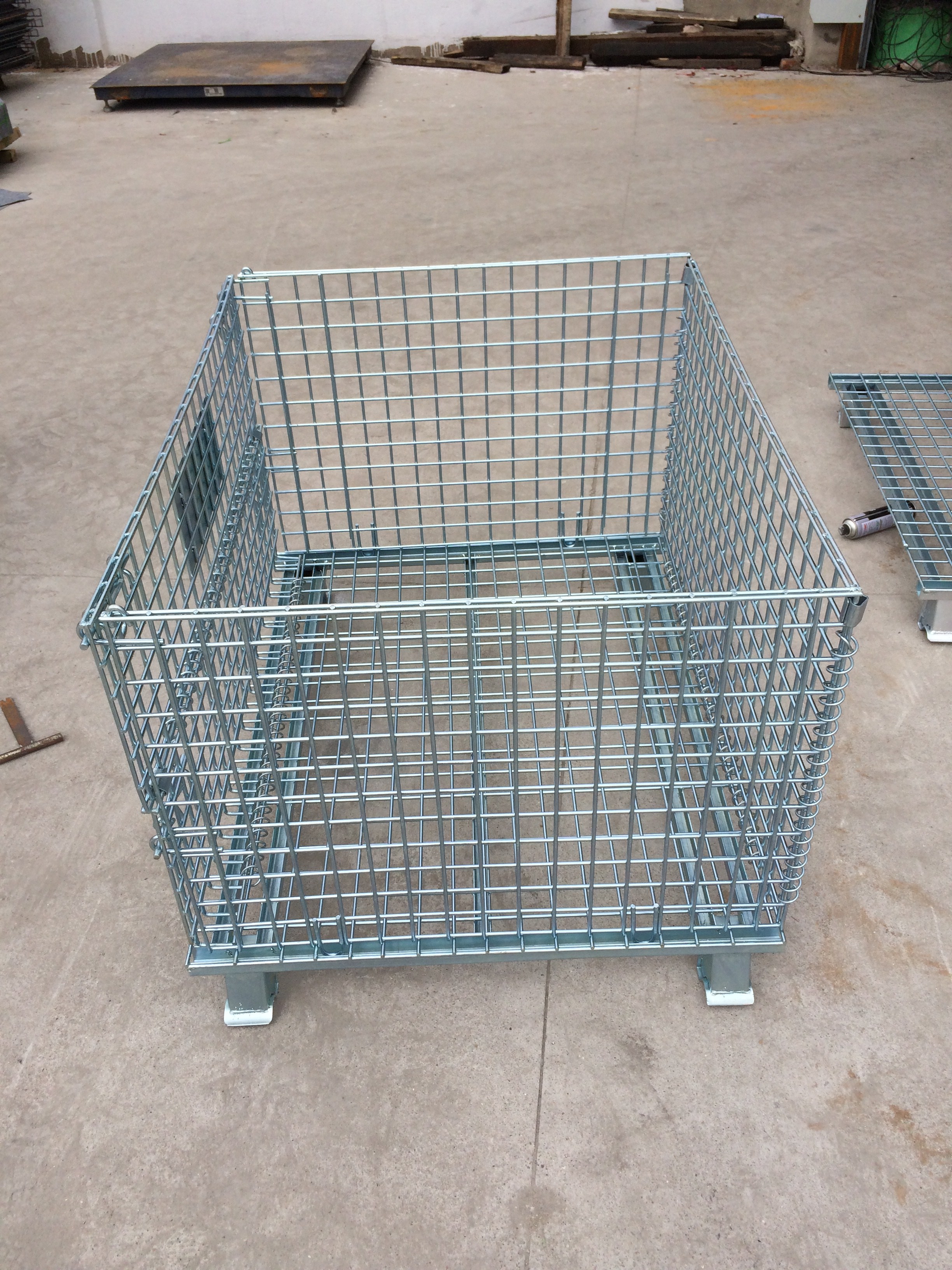
Foldable cages are widely used by manufacturers and large warehouse supermarkets for temporary storage, transport, and sorting of raw materials, semi-finished goods, and finished goods. They resemble pallets, but the steel wire-mesh structure stacks three-dimensionally, doubles as a turnover box, and acts as a sales container. How do you judge one cage? Watch three key points. First, welding. Passing material checks is not enough; the mesh panel and base must be welded solid. Every wire intersection on the panel must be welded — no missed or cold joints; the base needs full welding for reliable strength. Second, high-wire material. The cage body is high wire plus channel steel, and the wire material sets overall strength. Wire from large mills is generally more consistent than from small ones; reputable makers can supply a material test report — ask for one. Third, channel thickness. Much of the cage's load presses on the bottom channel; thin channel makes any stack feel shaky. Ask the channel thickness clearly and match it to your load requirement.